
HP to kW Calculator
Convert horsepower to kilowatts in one step. Enter the horsepower, choose the definition (mechanical, electric, or metric PS), and get the exact kW, with the formula shown.
How to Convert Horsepower to Kilowatts
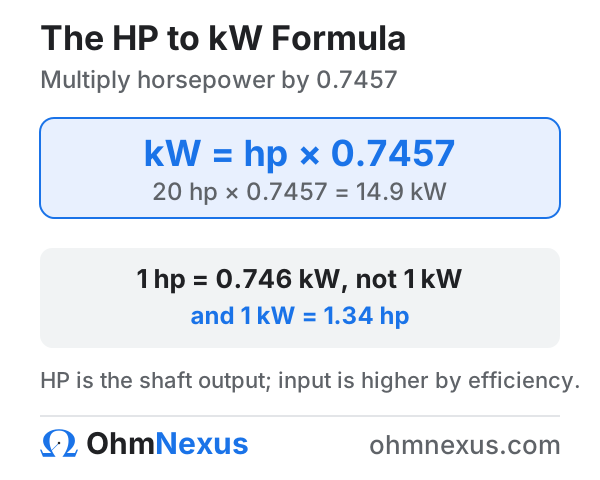
One horsepower equals about 0.746 kilowatts. To convert horsepower to kilowatts, multiply the horsepower by 0.7457, the mechanical horsepower factor used in the United States.
- kW = power in kilowatts
- hp = mechanical (imperial) horsepower
- 0.7457 = kilowatts in one horsepower (1 hp = 745.7 W)
Example: a 20 hp motor is 20 × 0.7457 = 14.9 kW.
That factor covers almost every case, since "horsepower" on its own means mechanical horsepower unless a spec sheet says otherwise. For the reverse direction, our kW to HP calculator divides by the same factor.
Is 1 HP equal to 1 kW?
No. One horsepower is 0.746 kilowatts, not one kilowatt. The kilowatt is the larger unit: it takes about 1.34 hp to make one kilowatt. People assume the two are equal because they sound similar, but a motor rated at 1 hp puts out roughly three-quarters of a kilowatt. Keeping this straight matters when you size a supply or compare a US horsepower rating against a kilowatt-rated machine.
The three horsepower definitions
The exact factor depends on which horsepower you mean.
| Horsepower type | 1 hp in kW | hp to kW factor | Where it is used |
|---|---|---|---|
| Mechanical / imperial (hp) | 0.7457 kW | hp × 0.7457 | US default, motors, machinery |
| Electric (hp) | 0.746 kW | hp × 0.746 | Electric motors, air conditioners |
| Metric (PS or CV) | 0.7355 kW | PS × 0.7355 | European car engines |
Mechanical horsepower, sometimes called American horsepower, is the US default. Electric horsepower is defined as exactly 746 W and appears on some motor and air-conditioner nameplates. Metric horsepower, written PS, is the European engine standard, so a 150 PS car is 110 kW. The three factors are the standard values in the NIST guide to SI units.
HP to kW conversion chart
These use mechanical horsepower (hp × 0.7457), the US default. Common motor sizes are included.
| Horsepower (hp) | Kilowatts (kW) |
|---|---|
| 1 hp | 0.75 kW |
| 2 hp | 1.49 kW |
| 3 hp | 2.24 kW |
| 4 hp | 2.98 kW |
| 5 hp | 3.73 kW |
| 10 hp | 7.46 kW |
| 15 hp | 11.19 kW |
| 20 hp | 14.91 kW |
| 25 hp | 18.64 kW |
| 45 hp | 33.56 kW |
| 50 hp | 37.29 kW |
| 75 hp | 55.93 kW |
| 100 hp | 74.57 kW |
For a value not in the chart, multiply by 0.7457. A 45 hp motor is 45 × 0.7457 = 33.56 kW, and a 30 hp motor is 22.37 kW. Pick the horsepower definition first and the calculator applies that factor: mechanical for US shaft ratings, electric for motor nameplates marked that way, metric PS for European ones.
How many kW is a 5 or 20 HP motor?
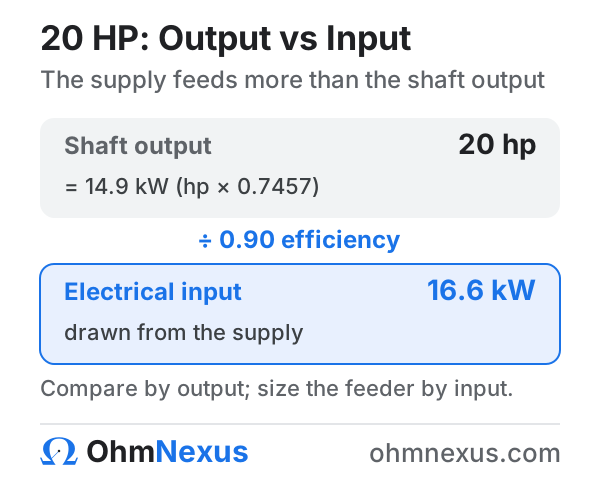
A 5 hp motor is 3.73 kW and a 20 hp motor is 14.9 kW. Motors are where this conversion comes up most: a US motor is stamped in horsepower under NEMA MG 1 (Motors and Generators), while the same motor built to IEC 60034-1 (rating of rotating electrical machines) is stamped in kilowatts. The two ranges line up at standard frame sizes.
| NEMA rating (hp) | IEC rating (kW) |
|---|---|
| 1 hp | 0.75 kW |
| 2 hp | 1.5 kW |
| 3 hp | 2.2 kW |
| 5 hp | 3.7 kW |
| 7.5 hp | 5.5 kW |
| 10 hp | 7.5 kW |
| 20 hp | 15 kW |
| 30 hp | 22 kW |
| 50 hp | 37 kW |
Does three-phase change the HP to kW conversion?
No. A three-phase motor rated at 20 hp is 14.9 kW, the same as a single-phase 20 hp motor. The kilowatt figure is the motor real power output, and horsepower already measures that output, so the number of phases does not enter the conversion. Phase matters only when you convert power to current: to size the wiring and overload for a three-phase motor, convert the kW to amps with our kW to Amps calculator, where the three-phase factor applies.
Motor output versus electrical input
The horsepower on a nameplate is mechanical output, so kW = hp × 0.7457 gives the output power. The electrical power the motor draws from the supply is higher, because no motor is 100 percent efficient: a 20 hp motor (14.9 kW output) at 90 percent efficiency pulls about 16.6 kW from the line. Use the output for nameplate comparisons, and add the efficiency margin when you size the feeder. For power from a measured current, see Amps to kW.
Where you will use this conversion
In practice this comes up in a few places. A plant electrician handed a 50 hp pump reads it as a 37 kW motor to check it against an IEC-rated drive. An HVAC tech comparing a 7.5 hp US compressor against a European 5.5 kW unit confirms they are the same machine. A generator installer converts a 30 hp engine to 22 kW to see the ceiling on electrical output before efficiency losses. In each case the horsepower is the mechanical output at the shaft.
Limitations and safe use
Two cautions. Horsepower is the mechanical output; the electrical input is higher by the motor efficiency, so a kW = hp × 0.7457 result understates the supply the motor actually draws. And never size conductors, breakers, or overloads from horsepower or from this converted kW: use the motor full-load current from NEC Article 430 (Table 430.250 for three-phase, NEC 2023) and the nameplate, allowing for service factor and starting inrush. This tool converts the power rating only, not a substitute for a circuit design by a qualified electrician. For apparent power to size a generator, see HP to kVA.
Frequently Asked Questions
How do I convert HP to kW?
Is 1 HP equal to 1 kW?
How many kW is a 5 HP motor?
How many kW is 20 HP 3 phase?
How many kW is 100 HP?
What is the HP to kW formula?
Get early access to OhmNexus Pro
Join the list for new calculators, guides and services, plus first access to our upcoming advanced and AI-assisted design tools. No spam; unsubscribe anytime.
Need more electrical tools?
View All Calculators