
kW to HP Calculator
Convert kilowatts to horsepower in one step. Enter a kW value, choose the horsepower definition (mechanical, electric, or metric PS), and read the exact hp with the formula shown.
How to Convert Kilowatts to Horsepower
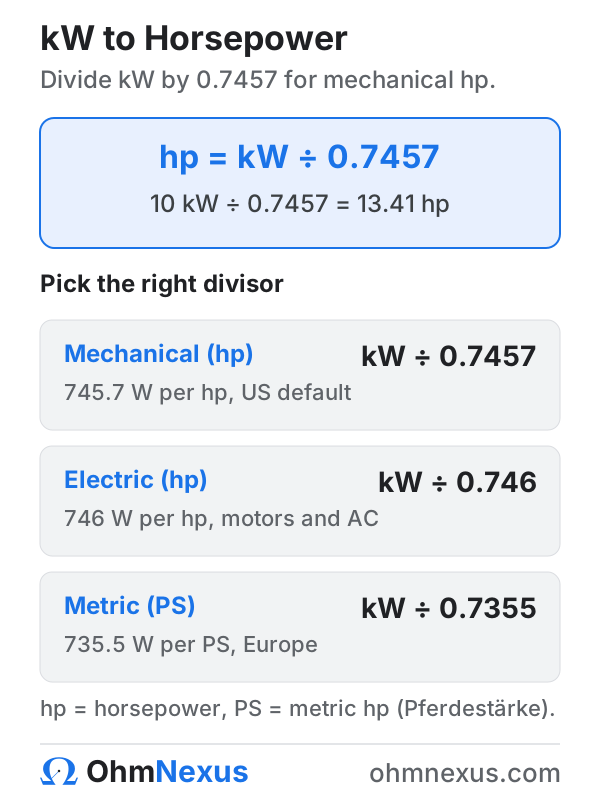
One kilowatt equals 1.34 horsepower. To convert kilowatts to mechanical horsepower, the definition used in the United States, divide the kilowatts by 0.7457.
- hp = mechanical (imperial) horsepower
- kW = power in kilowatts
- 0.7457 = kilowatts in one horsepower (1 hp = 745.7 W)
Example: a 10 kW motor is 10 / 0.7457 = 13.41 hp.
That single factor handles nearly every day-to-day conversion, because "horsepower" on its own means mechanical (imperial) horsepower unless a nameplate or spec sheet says otherwise. For the reverse direction, our HP to kW calculator multiplies by the same factor instead.
Kilowatts and horsepower are the same power in two units
A kilowatt and a horsepower both measure power, the rate at which energy is used or work is done. They are two units for one quantity, the way miles and kilometers are two units for distance. The kilowatt is the metric (SI) unit; the horsepower is an older unit that James Watt defined in the 1780s so he could rate his steam engines against the draft horses they replaced. Because both describe the same physical thing, going from one to the other is a fixed multiplication, never a change in what is being measured. That is why a search for "kilowatt and horsepower," or "kW and hp," always resolves to one number once you settle which horsepower you mean.
The kilowatt is the larger unit: 1 kW = 1.34 hp, and 1 hp = 0.746 kW. So the same power written in horsepower is always a bigger looking number than it is in kilowatts. To read a horsepower rating back into kilowatts, reverse the formula.
- kW = power in kilowatts
- hp = mechanical horsepower
Example: a 20 hp motor is 20 × 0.7457 = 14.9 kW.
The three horsepower definitions
Horsepower has more than one official value, so the exact factor depends on which definition applies.
| Horsepower type | 1 hp in watts | kW to hp factor | Where it is used |
|---|---|---|---|
| Mechanical / imperial (hp) | 745.7 W | kW / 0.7457 | US default, motors, machinery |
| Electric (hp) | 746 W | kW / 0.746 | Electric motors, air conditioners |
| Metric (PS or CV) | 735.5 W | kW / 0.7355 | European car engines |
For US electrical and mechanical work, use mechanical horsepower, sometimes called American horsepower. Electric horsepower is defined as exactly 746 W and appears on some motor and HVAC nameplates, though it differs from mechanical hp by less than one percent. Metric horsepower, written PS (from the German Pferdestärke) or CV, is the European engine standard, so a car rated at 150 PS is quoting this version. The three factors are the standard values in the NIST guide to SI units.
What about BHP?
Brake horsepower (bhp) is engine output measured at the crankshaft on a brake dynamometer, before losses through the gearbox and drivetrain. Numerically it uses the mechanical horsepower value, so the same math applies: to convert kW to bhp, divide by 0.7457. A 300 kW engine is 300 / 0.7457 = 402 bhp. You see "kW to bhp" most with car and motorcycle engines, where output is increasingly published in kilowatts while drivers still think in horsepower.
kW to HP conversion chart
These use mechanical horsepower (kW / 0.7457), the US default. The PS column is metric horsepower for European engine specs. Small kilowatt values line up with common motor sizes.
| Kilowatts (kW) | Mechanical hp | Metric hp (PS) |
|---|---|---|
| 1 kW | 1.34 hp | 1.36 PS |
| 2.2 kW | 2.95 hp | 2.99 PS |
| 3 kW | 4.02 hp | 4.08 PS |
| 5 kW | 6.71 hp | 6.80 PS |
| 7.5 kW | 10.06 hp | 10.20 PS |
| 15 kW | 20.12 hp | 20.39 PS |
| 25 kW | 33.53 hp | 33.99 PS |
| 37 kW | 49.62 hp | 50.31 PS |
| 75 kW | 100.58 hp | 101.97 PS |
| 110 kW | 147.51 hp | 149.56 PS |
| 150 kW | 201.15 hp | 203.94 PS |
| 250 kW | 335.26 hp | 339.91 PS |
For a value not in the chart, divide it by 0.7457. A 30 kW motor is 30 / 0.7457 = 40.2 hp, and a 200 kW motor is 268.2 hp. Choose which horsepower you want and the calculator converts to that one, so the factor always matches the standard you are quoting.
Electric motors: kW and hp on the nameplate
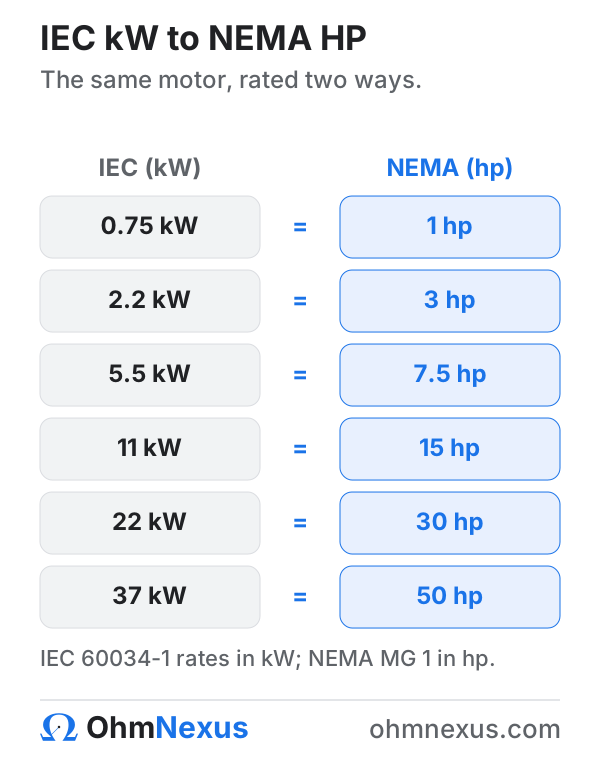
Motors are where kilowatts and horsepower meet most. Motors built to the IEC standard IEC 60034-1 (rating and performance of rotating electrical machines) are rated in kilowatts, while motors built to the US standard NEMA MG 1 (Motors and Generators) are rated in horsepower. The two ranges line up at familiar nominal sizes, which is why a 0.75 kW motor and a 1 hp motor are the same machine.
| IEC rating (kW) | NEMA rating (hp) |
|---|---|
| 0.75 kW | 1 hp |
| 1.5 kW | 2 hp |
| 2.2 kW | 3 hp |
| 3.7 kW | 5 hp |
| 5.5 kW | 7.5 hp |
| 7.5 kW | 10 hp |
| 11 kW | 15 hp |
| 15 kW | 20 hp |
| 18.5 kW | 25 hp |
| 22 kW | 30 hp |
| 37 kW | 50 hp |
| 75 kW | 100 hp |
These are the nearest standard frame sizes, not exact conversions: a 2.2 kW motor works out to 2.95 hp but is sold as the 3 hp NEMA size. When you size the wiring and overload protection for a motor, work from its full-load current, not its horsepower. The table current comes from the motor tables in NEC Article 430 (Table 430.250 for three-phase motors, NEC 2023) and applies to the conductors, the switch rating, and the branch-circuit short-circuit and ground-fault protection under 430.6(A)(1). Separate motor overload protection is the exception: 430.6(A)(2) sizes that from the motor nameplate current instead. Our kW to Amps calculator turns a kW rating into amps while Amps to kW does the reverse.
Car and engine power: kW, PS, and bhp
Automotive power is where these units collide most. European makers quote engine and EV motor output in kilowatts and metric horsepower (PS), while US and UK figures use brake horsepower. A 150 kW electric motor is 201 hp or 204 PS, and a 300 kW performance engine is about 402 bhp. Because the metric and mechanical definitions differ by roughly one percent, the same 110 kW rating reads as 150 PS in Europe but about 148 hp in US terms. When you compare an EV rated in kW against a gasoline car rated in horsepower, converting both to one unit first is the only fair way to line them up.
Where you will use this conversion
In practice this comes up in a few places. An HVAC contractor comparing a European compressor listed at 11 kW against a US catalog in hp converts to see it is a 15 hp unit. A plant electrician handed a 37 kW pump reads it as a 50 hp motor to pull the right starter and overload. A shop owner spec'ing a 7.5 kW dust collector confirms it is the 10 hp machine on the US price list. In each case the horsepower is the mechanical output at the shaft, which is what the two standards rate.
Limitations and safe use
Two cautions. First, horsepower is the mechanical output at the shaft, so the electrical input the motor draws is higher by its efficiency; a 15 kW motor at 92 percent efficiency pulls about 16.3 kW from the supply. Second, never size conductors, breakers, or overloads from horsepower alone: use the full-load current per NEC Article 430 and the motor nameplate, and allow for the service factor and starting inrush. This calculator converts the power rating only; it is not a substitute for a circuit design by a qualified electrician. For apparent power to size a generator or transformer, see kW to kVA.
Frequently Asked Questions
How do you convert kW to HP?
How many HP is 1 kW?
How many kW is 1 HP?
How many kW is a 7.5 HP motor?
How many BHP is 300 kW?
What is the difference between kW and HP?
Get early access to OhmNexus Pro
Join the list for new calculators, guides and services, plus first access to our upcoming advanced and AI-assisted design tools. No spam; unsubscribe anytime.
Need more electrical tools?
View All Calculators