
VA to kW Calculator: Real Power From a Volt-Amp Rating
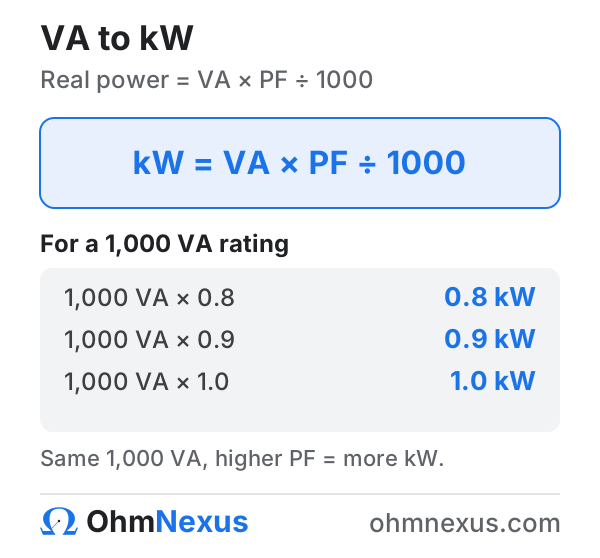
This VA to kW calculator converts apparent power in volt-amperes to real power in kilowatts using the power factor: kW = VA × power factor ÷ 1,000. Enter the VA and the power factor to read the kW that a UPS, small generator, or other VA-rated equipment actually delivers. The conversion is the same for single-phase and three-phase, because the power factor is all it needs, which is why the kW is always lower than the VA figure. A 1,000 VA supply is 0.8 kW at a 0.8 power factor.
How to Convert VA to kW
To convert VA to kW, multiply the apparent power in volt-amperes by the power factor, then divide by 1,000. Real power in kilowatts equals VA times power factor divided by 1,000, so kW = VA × PF ÷ 1,000. The power factor turns apparent power into real power, and the 1,000 turns volt-amperes into kilowatts.
VA is the total, or apparent, power a source supplies; kW is the real power that does useful work. The power factor is the only extra number you need, and the conversion is the same for single-phase and three-phase. Most generators and motors run near a 0.8 power factor, so 1,000 VA delivers about 0.8 kW. To reverse this, the kW to VA calculator divides by the power factor and multiplies by 1,000.
VA to kW Formula
- kW = real power in kilowatts
- VA = apparent power in volt-amperes
- PF = power factor, 0 to 1 (the ratio of real to apparent power)
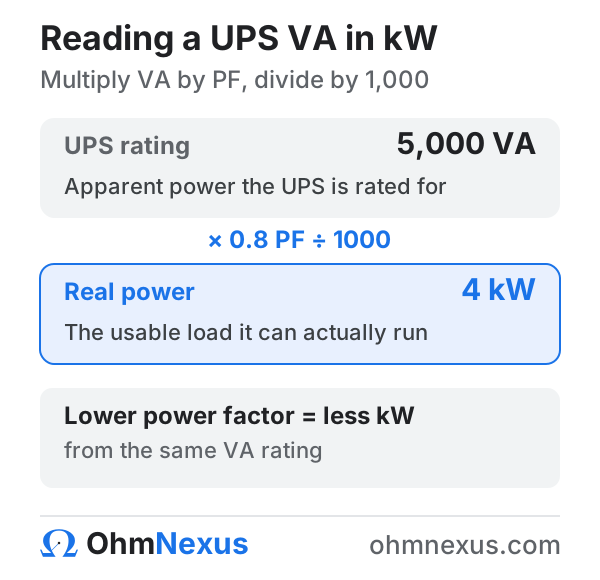
Example: a 5,000 VA UPS at 0.8 power factor delivers 5000 × 0.8 ÷ 1000 = 4 kW.
There is no voltage, phase, or three-phase factor in this conversion. Those all sit inside the VA figure already, so a three-phase VA converts to kW the same way a single-phase VA does: multiply by the power factor and divide by 1,000. A power factor of 1, a purely resistive load, makes the kW equal to the VA in kilowatts; any lower power factor makes the kW smaller.
How to Use the VA to kW Calculator
- Enter the apparent power in VA. This is the rating printed on a UPS, small generator, or transformer nameplate.
- Enter the power factor. Use the load's actual value if you know it, 0.8 for a typical generator or motor load, or 1 for a purely resistive load like a heater.
- Read the real power in kW. That is the useful working power the equipment delivers at that power factor.
The power-factor default is 0.8, the generator-set convention. For resistive loads such as heaters, use 1.0, where the kW equals the VA expressed in kilowatts.
VA to kW Worked Examples
Example 1: 1,000 VA at 0.8 Power Factor
At a 0.8 power factor:
kW = 1000 × 0.8 ÷ 1000 = 0.8 kW
Because 1,000 VA is the same as 1 kVA, that 0.8 kW matches converting 1 kVA to kW.
Example 2: 5,000 VA UPS at 0.8 Power Factor
A 5,000 VA UPS feeding a mixed load at a 0.8 power factor delivers:
kW = 5000 × 0.8 ÷ 1000 = 4 kW
That 4 kW is the real power the UPS can actually run, even though its apparent-power rating is 5,000 VA. Modern UPS units feeding near-unity IT loads deliver closer to 5 kW from the same rating.
Example 3: 3,000 VA at 0.9 Power Factor
A 3,000 VA load with a better 0.9 power factor gives:
kW = 3000 × 0.9 ÷ 1000 = 2.7 kW
The higher the power factor, the closer the kW is to the VA in kilowatts, because less of the apparent power is reactive.
Example 4: 2,000 VA Resistive Load (Power Factor 1.0)
A purely resistive load, such as a 2,000 VA heater, runs at a power factor of 1:
kW = 2000 × 1.0 ÷ 1000 = 2 kW
Here the kW equals the VA expressed in kilowatts, because all the apparent power does real work.
VA to kW Conversion Chart
This chart gives the real power in kW for common VA ratings at three power factors. The kW rises with the power factor and equals the VA in kilowatts only when the power factor is 1.
| Apparent Power | kW at PF 0.8 | kW at PF 0.9 | kW at PF 1.0 |
|---|---|---|---|
| 500 VA | 0.40 kW | 0.45 kW | 0.50 kW |
| 1,000 VA | 0.80 kW | 0.90 kW | 1.00 kW |
| 1,500 VA | 1.20 kW | 1.35 kW | 1.50 kW |
| 2,000 VA | 1.60 kW | 1.80 kW | 2.00 kW |
| 3,000 VA | 2.40 kW | 2.70 kW | 3.00 kW |
| 5,000 VA | 4.00 kW | 4.50 kW | 5.00 kW |
| 7,500 VA | 6.00 kW | 6.75 kW | 7.50 kW |
| 10,000 VA | 8.00 kW | 9.00 kW | 10.00 kW |
| 15,000 VA | 12.00 kW | 13.50 kW | 15.00 kW |
| 20,000 VA | 16.00 kW | 18.00 kW | 20.00 kW |
How Many kW Is 1,000 VA?
One thousand VA is 0.8 kW at a 0.8 power factor, the value most generators and mixed loads use. At a 0.9 power factor it is 0.9 kW, and only at a power factor of 1, a purely resistive load, does 1,000 VA equal a full 1 kW. Because 1,000 VA is the same as 1 kVA, the answer is identical to converting 1 kVA to kW: the volt-ampere is just the smaller unit.
This is why a piece of equipment carries both a VA figure and a lower kW or watt figure. The VA is the apparent power it handles; the kW is the real power it can run at a stated power factor. The lower the power factor, the further apart the two numbers sit.
VA vs kW: Apparent Power and Real Power
VA and kW measure different things. VA (volt-amperes) is apparent power, the product of the voltage and the current a circuit carries. kW (kilowatts) is real power, the part of that apparent power that does useful work. The power factor is the ratio between them, so kW = VA × PF ÷ 1,000, and the two are equal only when the power factor is 1.
You size wiring, breakers, and a UPS or generator from the apparent power, because those are limited by current. You count real load, energy use, and running cost in kW. For the full comparison of apparent and real power, and when to use each, the kVA to kW calculator covers kW versus kVA, and the amps to kVA calculator shows the power triangle. For what a volt-ampere is on its own, see the amps to VA calculator.
VA to kW for a UPS or Small Generator
Small equipment is often rated in volt-amperes, and converting that rating to kW tells you the real load it can carry. An uninterruptible power supply rated at 3,000 VA delivers 2.4 kW at a 0.8 power factor, and a 10,000 VA unit delivers 8 kW. A small standby generator rated in VA follows the same math. Traditionally the real-power figure is about 0.6 to 0.8 of the VA, though modern UPS units feeding IT loads run closer to 0.9, so check the nameplate rather than assume a value.
Generator sets are rated at a 0.8 power factor by convention under ISO 8528, the generator-set standard, and apparent, real, and reactive power are defined in IEEE Std 1459, the IEEE standard for electric power quantities. When you compare equipment, check which power factor a kW rating assumes.
Why VA to kW Needs the Power Factor
Converting VA to kW needs the power factor and nothing else. No voltage or phase enters here, because both were folded into the VA rating when it was measured, so a single-phase and a three-phase supply convert identically. The √3 some people reach for lives in the amp calculations that come before this step, not in it. At a 0.8 power factor a 6,000 VA load is 4.8 kW on either supply. The power factor is the ratio of real to apparent power; with none on the nameplate, 0.8 suits a generator or motor load and 1.0 suits resistive heating.
Common Mistakes When Converting VA to kW
- Assuming VA equals kW. They match only at a power factor of 1; at 0.8, a 1,000 VA supply is 0.8 kW, not 1 kW.
- Forgetting to divide by 1,000. VA to kW divides by 1,000 as well as multiplying by the power factor; leaving it out gives an answer a thousand times too large.
- Adding a three-phase factor. kW = VA × PF ÷ 1,000 is the same for any phase; the √3 belongs to the current conversions.
- Using the wrong power factor. The kW scales directly with it, so a guessed power factor gives a guessed answer. Use the nameplate value where you can.
- Sizing a cable or breaker from the kW. Those are limited by current, so size them from the VA or the amps, not the kW.
Disclaimer: This calculator converts apparent power to real power at the power factor you enter. Real equipment performance also depends on load type, harmonics, and operating conditions. Always verify against manufacturer data and your local electrical code, and consult a licensed electrician or professional engineer for equipment selection and installation. Generator and UPS ratings follow standards such as ISO 8528; confirm the assumed power factor on any nameplate.
Frequently Asked Questions
How do you convert VA to kW?
Multiply the apparent power in VA by the power factor, then divide by 1,000: kW = VA × PF ÷ 1,000. The power factor (0 to 1) converts apparent power to real power, and the 1,000 converts volt-amperes to kilowatts. For example, a 5,000 VA UPS at a 0.8 power factor is 5000 × 0.8 ÷ 1000 = 4 kW. There is no voltage or phase in the formula.
How many kW is 1000 VA?
It depends on the power factor. kW equals VA × power factor ÷ 1,000, so 1,000 VA is 0.8 kW at a 0.8 power factor, 0.9 kW at 0.9, and 1 kW only at a power factor of 1. Since 1,000 VA is the same as 1 kVA, the answer matches converting 1 kVA to kW.
What is 5000 VA in kW?
At a 0.8 power factor, 5,000 VA is 5000 × 0.8 ÷ 1000 = 4 kW; at 0.9 it is 4.5 kW; and at a power factor of 1 it is 5 kW. A 5,000 VA UPS or small generator therefore supplies about 4 kW of real power at the usual 0.8 power factor.
Is VA the same as kW?
No. VA (volt-amperes) is apparent power, the product of volts and amps; kW is real power, the part that does useful work. The power factor links them: kW = VA × power factor ÷ 1,000. On any load with a motor or electronics, the kW is lower than the VA suggests, and the two match only at a power factor of 1. For example, 1,000 VA is 0.8 kW at a 0.8 power factor.
Does VA to kW change for three-phase?
No. kW = VA × power factor ÷ 1,000 is the same for single-phase and three-phase. There is no separate three-phase formula and no √3 here, because the three-phase factor and the voltage are already inside the VA figure. A 4,000 VA load is 3.2 kW at a 0.8 power factor whether it is single-phase or three-phase.
How many VA is 1 kW?
Reverse the conversion: VA = kW × 1,000 ÷ power factor. At a 0.8 power factor, 1 kW needs 1 × 1,000 ÷ 0.8 = 1,250 VA; at a power factor of 1 it needs 1,000 VA. The kW to VA calculator works this direction directly.
Get early access to OhmNexus Pro
Join the list for new calculators, guides and services, plus first access to our upcoming advanced and AI-assisted design tools. No spam; unsubscribe anytime.
Need more electrical tools?
View All Calculators