
kVA to kW Calculator: Convert With Power Factor
This kVA to kW calculator converts apparent power in kilovolt-amps to real power in kilowatts. Enter the kVA and the power factor, then read the kW, since real power is apparent power times the power factor. The same formula works for single-phase and three-phase, and the page explains the difference between kVA and kW and when to use each.
How to Convert kVA to kW
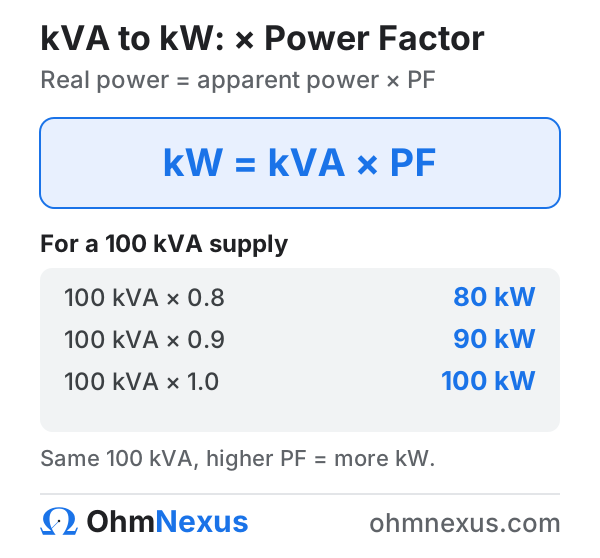
To convert kVA to kW, multiply the apparent power in kilovolt-amps by the power factor. Real power in kilowatts equals apparent power in kilovolt-amps times power factor, so kW = kVA × PF. The same formula works for single-phase and three-phase, because the phase is already accounted for in the kVA.
kVA is the total, or apparent, power a system carries; kW is the real power that does useful work. The power factor is what separates them, and it's the only extra number you need. Most generators and motors run near a 0.8 power factor, so their real kW output lands well below the kVA on the nameplate. To reverse this, the kW to kVA calculator divides by the power factor, and for the full meaning of kVA see the amps to kVA calculator.
kVA to kW Formula
- kW = real power in kilowatts
- kVA = apparent power in kilovolt-amps
- PF = power factor, 0 to 1 (the ratio of real to apparent power)
Example: a 100 kVA generator at 0.8 power factor delivers 100 × 0.8 = 80 kW.
There is no voltage, phase, or three-phase factor in this conversion. Those all sit inside the kVA figure already, so a three-phase kVA converts to kW exactly the same way a single-phase kVA does: multiply by the power factor. A power factor of 1 (a purely resistive load) makes kW equal to kVA; any lower power factor makes the kW smaller.
How to Use the kVA to kW Calculator
- Enter the apparent power in kVA. This is the rating printed on a transformer, generator, or UPS nameplate.
- Enter the power factor. Use the load's actual value if you know it, 0.8 for a typical generator or motor load, or 1 for a purely resistive load like a heater.
- Read the real power in kW. That is the useful working power the equipment delivers at that power factor.
kVA to kW Worked Examples
Example 1: 100 kVA Generator at 0.8 Power Factor
Standby generator sets are rated at a 0.8 power factor. A 100 kVA generator therefore delivers:
kW = 100 × 0.8 = 80 kW
This is why the same machine is sold as both "100 kVA" and "80 kW". They describe one generator at its rated power factor.
Example 2: 25 kVA Transformer Feeding a 0.9 Power Factor Load
A 25 kVA transformer supplies a load with a 0.9 power factor:
kW = 25 × 0.9 = 22.5 kW
The transformer can carry 25 kVA of apparent power, but only 22.5 kW of it does real work at this power factor.
Example 3: 10 kVA Resistive Load (Power Factor 1.0)
A purely resistive load, such as an electric heater bank, runs at a power factor of 1:
kW = 10 × 1.0 = 10 kW
Here kVA and kW are equal, because all the apparent power does real work.
Example 4: 500 kVA Data-Center UPS at 0.9 Power Factor
A 500 kVA UPS supporting IT loads at a 0.9 power factor delivers:
kW = 500 × 0.9 = 450 kW
Modern IT power supplies run near unity, so newer UPS units are often rated closer to 1.0, where 500 kVA would give nearly 500 kW.
kVA to kW Conversion Chart
This chart shows real power in kW for common kVA ratings at three power factors. The kW rises with the power factor and equals the kVA only when the power factor is 1.
| Apparent Power | kW at PF 0.8 | kW at PF 0.9 | kW at PF 1.0 |
|---|---|---|---|
| 1 kVA | 0.8 kW | 0.9 kW | 1.0 kW |
| 5 kVA | 4.0 kW | 4.5 kW | 5.0 kW |
| 10 kVA | 8.0 kW | 9.0 kW | 10.0 kW |
| 15 kVA | 12.0 kW | 13.5 kW | 15.0 kW |
| 25 kVA | 20.0 kW | 22.5 kW | 25.0 kW |
| 50 kVA | 40.0 kW | 45.0 kW | 50.0 kW |
| 75 kVA | 60.0 kW | 67.5 kW | 75.0 kW |
| 100 kVA | 80.0 kW | 90.0 kW | 100.0 kW |
| 150 kVA | 120.0 kW | 135.0 kW | 150.0 kW |
| 250 kVA | 200.0 kW | 225.0 kW | 250.0 kW |
| 500 kVA | 400.0 kW | 450.0 kW | 500.0 kW |
kW vs kVA: What Is the Difference?
The difference between kW and kVA is the power factor. kVA is apparent power, the total power a source has to supply; kW is real power, the part that does useful work. They are equal only when the power factor is 1. On any real load with motors or electronics, the kVA is larger than the kW, because some of the current does no net work.
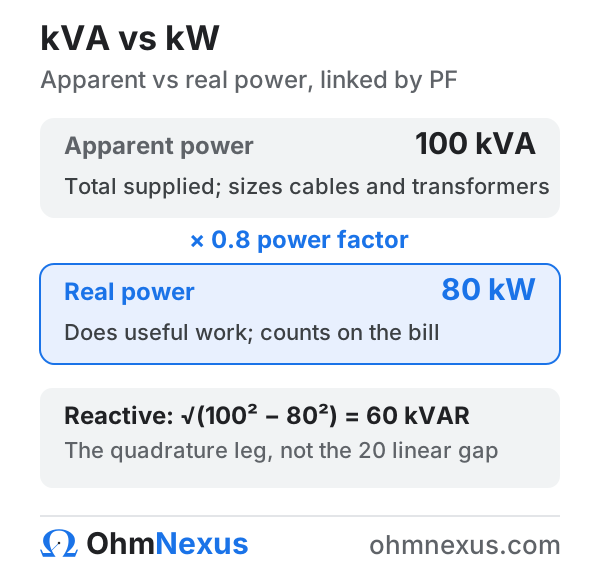
Which one you use depends on the job. You size cables, breakers, transformers, and generators in kVA, because those are limited by the total current they carry regardless of power factor (to go from kVA to that current, use the kVA to amps calculator). You count energy use, motor output, and electricity bills in kW and kWh, because those are about real work. A generator's kVA tells you how much current it can push; its kW tells you how much real load it can actually run.
| kVA (apparent power) | kW (real power) | |
|---|---|---|
| What it measures | Total power supplied (volts × amps) | Power that does useful work |
| Includes reactive power? | Yes, the full current | No, real power only |
| What it sizes | Cables, breakers, transformers, generators | Energy use, motor output, bills |
| Relationship | kVA = kW ÷ PF | kW = kVA × PF |
| Equal when | Power factor = 1 (a purely resistive load) | |
The two are sides of the power triangle, where apparent power (kVA) is the hypotenuse and real power (kW) is the base. The amps to kVA calculator shows that triangle in full, including reactive power (kVAR), which sets the current a capacitor bank has to carry.
Why the Phase Doesn't Change kVA to kW
Converting kVA to kW is the same for single-phase and three-phase systems: kW = kVA × PF either way. People often look for a separate three-phase formula with a three-phase factor in it, but that factor belongs to the current conversions, not this one. The three-phase factor and the voltage are already built into the kVA figure, so once you have the kVA there is nothing phase-specific left to do. Whether your 50 kVA comes from a single-phase or a three-phase supply, at 0.8 power factor it is 40 kW.
Power Factor: The Link Between kVA and kW
Power factor is the ratio of real power to apparent power, kW ÷ kVA, and it runs from 0 to 1. A power factor of 1 means every bit of apparent power does real work; a power factor of 0.8 means only 80% does. It reflects how far the current and voltage are out of step, which happens with motors, transformers, and some electronics. When a nameplate doesn't state the power factor, these working values help.
| Load Type | Typical Power Factor |
|---|---|
| Resistive (heater, incandescent lamp) | 1.0 |
| Standby generator (rated) | 0.8 |
| Induction motor (full load) | 0.85-0.9 |
| Induction motor (light load) | 0.3-0.6 |
| Modern IT / server power supply | 0.95-1.0 |
| LED lighting | 0.9-0.95 |
| Welding machine | 0.5-0.8 |
Apparent, real, and reactive power are defined in IEEE Std 1459, the IEEE standard for electric power quantities; power factor is the ratio the standard uses to relate them.
kVA to kW for Generators, Transformers, and UPS Systems
Generators, transformers, and UPS units are where kVA and kW appear side by side. Diesel and gas generator sets are rated at a 0.8 power factor by convention (ISO 8528, the generator-set standard), so their kW rating is 80% of their kVA: a 125 kVA set is 100 kW. Transformers are rated only in kVA, because they don't depend on power factor; the kW they deliver depends on the load. UPS systems used to follow the 0.8 convention too, but modern units feeding near-unity IT loads are increasingly rated in kW close to their kVA. When you compare equipment, check which power factor a kW rating assumes, and count long-run energy with the kW to kWh calculator.
Common Mistakes When Converting kVA to kW
- Assuming kVA equals kW. They are equal only at a power factor of 1; a 200 kVA generator is 160 kW at its rated 0.8 power factor, not 200 kW.
- Adding a three-phase factor. kW = kVA × PF is the same for any phase; the three-phase factor belongs to the current conversions.
- Using the wrong power factor. The kW scales directly with it, so a guessed power factor gives a guessed kW. Use the nameplate value where you can.
- Sizing a cable or breaker from kW. Those are limited by current, so size them from the kVA or the amps, not the kW.
- Comparing a kW rating to a kVA rating directly. Convert one to the other first, at the same power factor.
Disclaimer: This calculator converts apparent power to real power at the power factor you enter. Real equipment performance also depends on load type, harmonics, and operating conditions. Always verify against manufacturer data and your local electrical code, and consult a licensed electrician or professional engineer for equipment selection and installation. Generator and UPS ratings follow standards such as ISO 8528; confirm the assumed power factor on any nameplate.
Frequently Asked Questions
How do you convert kVA to kW?
Multiply the apparent power in kVA by the power factor: kW = kVA × PF. The power factor is the fraction of the apparent power that does real work, from 0 to 1. For example, a 100 kVA generator at a 0.8 power factor delivers 100 × 0.8 = 80 kW. There is no voltage or phase in the formula, because both are already contained in the kVA figure.
How many kW are in 1 kVA?
There is no single figure; it tracks the power factor. Read it as a per-kVA rate: 0.8 kW for every kVA at a 0.8 power factor, 0.9 kW per kVA at 0.9, rising to a full 1 kW per kVA only at unity. Whatever that rate is, multiply it by the kVA rating to reach the real power in kW.
What is 20 kVA in kW?
At a 0.8 power factor, 20 kVA is 20 × 0.8 = 16 kW; at 0.9 it is 18 kW; and at a power factor of 1 it is the full 20 kW. Because standby sets are rated at 0.8, a 20 kVA generator is usually badged 16 kW.
Is 60 kVA the same as 60 kW?
Only when the power factor is 1. The two ratings describe one generator from two sides: 60 kVA is the apparent power its windings and breaker can carry, while the kW is the real work it can do. At the standard 0.8 power factor that 60 kVA set delivers 48 kW, which is why the nameplate shows both numbers rather than one.
What is the difference between kVA and kW?
kVA is apparent power, the total power a source must supply; kW is real power, the part that does useful work. The power factor links them: kW = kVA × power factor. They are equal only at a power factor of 1. You size cables, transformers, and generators in kVA because they are limited by current, and you count energy and motor output in kW because that is the real work.
Does kVA to kW change for three-phase?
No. kW = kVA × power factor is the same for single-phase and three-phase systems. There is no separate three-phase formula and no √3 here, because the three-phase factor and the voltage are already inside the kVA. A 50 kVA load is 40 kW at a 0.8 power factor whether it is single-phase or three-phase.
Get early access to OhmNexus Pro
Join the list for new calculators, guides and services, plus first access to our upcoming advanced and AI-assisted design tools. No spam; unsubscribe anytime.
Need more electrical tools?
View All Calculators