
kW to kWh Calculator: Kilowatts to Kilowatt-Hours
Convert power in kilowatts (kW) to energy in kilowatt-hours (kWh) using the run time: kWh = kW × hours. A kilowatt is power, the rate at which energy is used, and a kilowatt-hour is the energy that rate delivers over time, so the two are not the same thing. Enter the kW and the hours to find the kWh a load, generator, or solar system uses or produces.
How to Convert kW to kWh
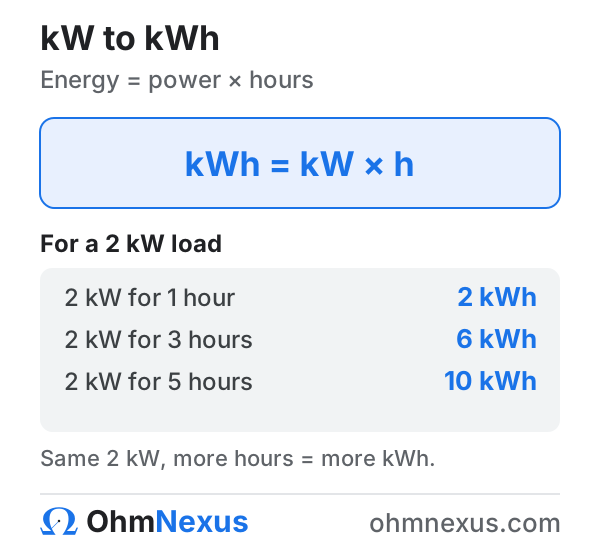
To convert kilowatts to kilowatt-hours, multiply the power in kilowatts by the number of hours it runs. Energy in kilowatt-hours equals power in kilowatts times time in hours, so kWh = kW × hours. The calculator needs the run time as well as the power, because a kilowatt is a rate and a kilowatt-hour is the energy that rate adds up to over time.
A kilowatt (kW) measures power, how fast energy is being used at a given moment. A kilowatt-hour (kWh) measures energy, the total amount used once that power runs for a while. Multiply the two and you get the energy. To go the other way, from an energy figure back to an average power, the kWh to kW calculator divides by the hours instead.
kW to kWh Formula
- kWh = energy in kilowatt-hours
- kW = power in kilowatts
- h = operating time in hours
Example: a 5 kW air conditioner running for 8 hours uses 5 × 8 = 40 kWh.
The formula is the same for single-phase and three-phase power. Once a load is expressed in kilowatts, the phase is already accounted for, so a "three-phase kW to kWh" calculation is just the same conversion as any other. There is no separate three-phase energy formula and no power factor in this step, because the kW is already the real power.
How to Use the kW to kWh Calculator
- Enter the power in kW. This is the load, or the rating of a device, generator, or solar system.
- Enter the run time in hours. For part of an hour, use a decimal: 30 minutes is 0.5.
- Read the energy in kWh. This is what a meter records and a utility bills for.
kW to kWh Worked Examples
Example 1: 2 kW for 3 Hours
A 2 kW load running three hours uses:
kWh = 2 × 3 = 6 kWh
Double the time to 6 hours and the same 2 kW load uses 12 kWh. The power is unchanged; the energy grows with the hours.
Example 2: 5 kW Air Conditioner for 8 Hours
A 5 kW central air conditioner running eight hours on a hot day uses:
kWh = 5 × 8 = 40 kWh
At an average U.S. rate near 17 cents per kWh, that is about $6.80 for the day's cooling.
Example 3: A 7 kW Solar System
A 7 kW solar system is rated by its power, not its energy. On a day with about 5 peak sun-hours it produces roughly 7 × 5 = 35 kWh, before system losses. The 7 kW is the capacity; the 35 kWh is what it actually delivers.
kW to kWh Conversion Chart
This chart gives the energy in kWh for common kW loads across four run times, using kWh = kW × hours. Find the power on the left and read across to the run time; the calculator above handles any values.
| Power | 1 hour | 4 hours | 8 hours | 24 hours |
|---|---|---|---|---|
| 0.5 kW | 0.5 kWh | 2 kWh | 4 kWh | 12 kWh |
| 1 kW | 1 kWh | 4 kWh | 8 kWh | 24 kWh |
| 2 kW | 2 kWh | 8 kWh | 16 kWh | 48 kWh |
| 3 kW | 3 kWh | 12 kWh | 24 kWh | 72 kWh |
| 5 kW | 5 kWh | 20 kWh | 40 kWh | 120 kWh |
| 7 kW | 7 kWh | 28 kWh | 56 kWh | 168 kWh |
| 10 kW | 10 kWh | 40 kWh | 80 kWh | 240 kWh |
| 20 kW | 20 kWh | 80 kWh | 160 kWh | 480 kWh |
| 50 kW | 50 kWh | 200 kWh | 400 kWh | 1,200 kWh |
kW vs kWh: What's the Difference?
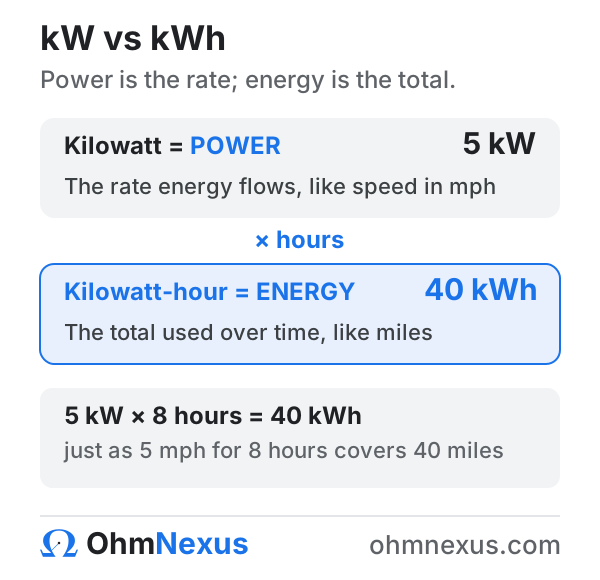
A kilowatt is power and a kilowatt-hour is energy: kW is the rate at which electricity is used, and kWh is the total amount used over time. This is the most common source of confusion on an electricity bill, in solar quotes, and on equipment nameplates. The two are linked by time, through kWh = kW × hours, but they are not interchangeable. As the U.S. Energy Information Administration defines them, a kilowatt is a measure of power and a kilowatt-hour is one kilowatt used for one hour.
The clearest way to picture it is a car. A kilowatt is like speed in miles per hour: it tells you how fast energy is being used right now. A kilowatt-hour is like distance in miles: it tells you how much has been used in total. A car going 60 mph covers 60 miles in one hour or 120 miles in two; a 3 kW heater uses 3 kWh in one hour or 6 kWh in two. Speed alone does not tell you distance until you add time, and kW alone does not tell you kWh until you add hours.
| Aspect | Kilowatt (kW) | Kilowatt-hour (kWh) |
|---|---|---|
| Measures | Power, the rate of energy use | Energy, the total amount used |
| Analogy | Speed (miles per hour) | Distance (miles traveled) |
| Depends on time | No, it is a rate at an instant | Yes, it is power times time |
| On your bill | The demand or capacity | The energy you are charged for |
| Example | A 5 kW air conditioner | 5 kW for 8 hours = 40 kWh |
So 1 kW is not the same as 1 kWh. A 1 kW load produces 1 kWh only after running for one full hour; in half an hour it uses 0.5 kWh, and in a day 24 kWh. For the same power-versus-energy split at the watt scale, the watts to kWh calculator covers watts and watt-hours, which work the same way one step down.
kW and kWh on Your Electricity Bill
On many bills, kW and kWh are charged separately, which is the practical reason the difference matters. The kWh, or energy, is what most residential customers pay for: the meter totals the kilowatt-hours used in the billing period and multiplies by the rate. Commercial and industrial accounts often also pay a demand charge based on the highest kW they draw at any point, because the utility has to size wires and transformers for that peak, not just for the total energy.
That is why a business can cut its kWh and still face a high bill if its peak kW stays high, and why load shifting, which lowers the peak kW without necessarily lowering total kWh, can save money. That peak kW also sets the current the wiring must carry, which the kW to amps calculator works out. For a home, the kWh is usually the whole story.
kW to kWh Per Day, Month, and Year
To turn a kW load into daily, monthly, or yearly energy, multiply by the hours it runs. A 2 kW load running 5 hours a day uses 2 × 5 = 10 kWh per day, about 300 kWh per month, and roughly 3,650 kWh per year. At an average U.S. rate near 17 cents per kWh, that 300 kWh month costs about $51.
Use the actual daily run time for anything that cycles, and remember that a nameplate kW is usually the maximum draw, so a device rarely runs at full power every hour. The energy is only ever the kW that is genuinely used times the hours it is genuinely used.
kW to kWh for Solar Systems
For solar, a system's kW rating is its power capacity, not the energy it produces. That output depends on the peak sun-hours a day brings, and drops further after inverter, wiring, and temperature losses, so the same panels make more on a long summer day than a short winter one. This is the difference behind "how big is your system", in kW, and "how much does it make", in kWh.
Battery storage is sized in kWh, the energy it holds, while its power rating in kW sets how fast it can deliver that energy. The formula is the same whether the power is AC from the grid or DC from a solar panel or battery, so a DC array uses it too. If a battery is rated in amp-hours, the Ah to kWh calculator converts its capacity to kWh first.
Common Mistakes Converting kW to kWh
- Treating 1 kW as 1 kWh. A kilowatt is power; it becomes a kilowatt-hour only after running for one hour.
- Leaving out the time. kW does not give kWh without the hours; energy is always power times time.
- Using the nameplate kW for every hour. Most loads draw less than their maximum most of the time; use the power actually used.
- Confusing a solar system's kW size with its kWh output. The kW is capacity; the kWh depends on sun-hours.
Disclaimer: This calculator converts power in kilowatts to energy in kilowatt-hours for the run time you enter. Real energy use depends on the actual load and how long it truly runs, since equipment cycles and rarely draws its full nameplate power every hour. For billing, solar production, or system sizing, verify against metered readings, your utility rate, and nameplate data, and consult a licensed electrician or qualified professional for installation decisions.
Frequently Asked Questions
How do you convert kW to kWh?
Multiply the power in kilowatts by the number of hours it runs: kWh = kW × hours. For example, a 3 kW load running 4 hours uses 3 × 4 = 12 kWh. You need both the kW and the run time, because a kilowatt is power and a kilowatt-hour is energy.
Is 1 kW equal to 1 kWh?
No. 1 kW is power, the rate energy is used, and 1 kWh is energy, an amount. A 1 kW load uses 1 kWh only after running for exactly one hour; over 30 minutes it uses 0.5 kWh, and over a day 24 kWh. The hours are what turn kW into kWh.
What is the difference between kW and kWh?
A kilowatt (kW) measures power, how fast energy is used, while a kilowatt-hour (kWh) measures energy, the total used over time. kW is like speed and kWh is like distance: a 5 kW load running 8 hours uses 40 kWh, just as 5 mph for 8 hours covers 40 miles. They are linked by kWh = kW × hours.
What is 1.5 kW in kWh?
It depends on the run time. Using kWh = kW × hours, 1.5 kW is 1.5 kWh over one hour, 3 kWh over two hours, and 0.75 kWh over 30 minutes. A kilowatt figure only becomes kilowatt-hours once you multiply by the hours it runs.
How many kW is 1000 kWh?
That is the reverse, and it needs a time. 1000 kWh spread over 24 hours averages 1000 ÷ 24 = about 41.7 kW; over a 30-day month it averages about 1.4 kW. The kWh to kW calculator works out the average power from an energy figure.
Does three-phase change the kW to kWh calculation?
No. kWh = kW × hours is the same for single-phase and three-phase. Once a load is measured in kilowatts, the phase and power factor are already built into that figure, so there is no separate three-phase energy formula. A 10 kW three-phase load running 6 hours uses 60 kWh, exactly like a single-phase one.
Get early access to OhmNexus Pro
Join the list for new calculators, guides and services, plus first access to our upcoming advanced and AI-assisted design tools. No spam; unsubscribe anytime.
Need more electrical tools?
View All Calculators