
kWh to kW Calculator: Average Power From Energy
Convert energy in kilowatt-hours (kWh) to power in kilowatts (kW) using the time the energy covers: kW = kWh ÷ hours. The result is the average power over that period, since a kilowatt-hour is energy and a kilowatt is power. Enter the kWh and the hours to find the average kW behind a meter reading, a demand figure, or a solar system.
How to Convert kWh to kW
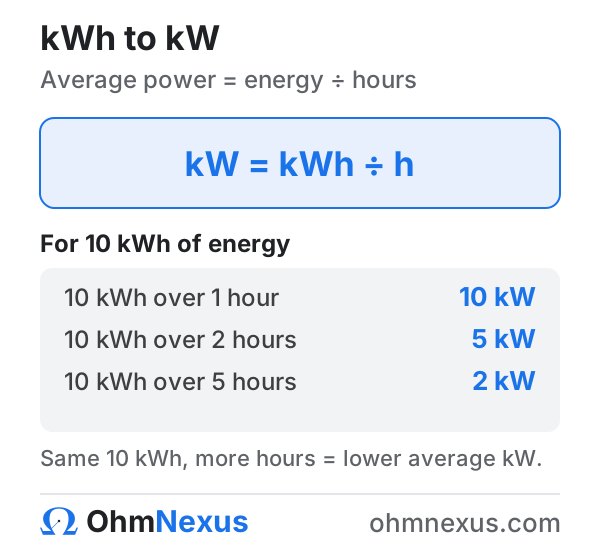
To convert kilowatt-hours to kilowatts, divide the energy in kWh by the number of hours it covers. Power in kilowatts equals kilowatt-hours divided by hours, so kW = kWh ÷ hours. The result is the average power over that time, because a kilowatt-hour is energy and a kilowatt is the rate that energy is used.
You need the time as well as the energy, since the same kWh spread over more hours means a lower average power. A kilowatt-hour is not a fixed number of kilowatts until you know the period. To go the other way, from a power and a run time to energy, the kW to kWh calculator multiplies instead of divides.
kWh to kW Formula
- kW = average power in kilowatts
- kWh = energy in kilowatt-hours
- h = time in hours the energy covers
Example: 10 kWh used over 5 hours is 10 ÷ 5 = 2 kW of average power.
Dividing by the hours is what turns energy into power, so "how many kW is a kWh" depends entirely on the time. 10 kWh drawn over 1 hour is 10 kW, over 5 hours is 2 kW, and over a full day well under 1 kW. The longer the period, the lower the average kilowatts for the same energy.
How to Use the kWh to kW Calculator
- Enter the energy in kWh. This is a meter reading, a bill total, or a solar or battery figure.
- Enter the time in hours the energy covers. A day is 24, and a 30-day month is 720.
- Read the average power in kW. This is the steady kilowatts that would use the same energy in that time.
kWh to kW Worked Examples
Example 1: 10 kWh Over 5 Hours
A load that uses 10 kWh across five hours averages:
kW = 10 ÷ 5 = 2 kW
That 2 kW is the average; the actual draw rises above and falls below it as equipment switches on and off.
Example 2: 1000 kWh in a Month
A home that uses 1000 kWh in a 30-day month (720 hours) averages:
kW = 1000 ÷ 720 = 1.39 kW
So a 1000 kWh month is about 1.4 kW of average continuous power, a useful figure for comparing homes or sizing a supply.
Example 3: 30 kWh in a Day
A house using 30 kWh over 24 hours averages 30 ÷ 24 = 1.25 kW. The peak it hits when several appliances run at once is much higher, which matters for sizing, as the next section explains.
kWh to kW Conversion Chart
This chart gives the average power in kW for common kWh amounts across four time periods, using kW = kWh ÷ hours. Find the energy on the left and read across to the period; the calculator above handles any values.
| Energy | Over 1 hour | Over 2 hours | Over 5 hours | Over 10 hours |
|---|---|---|---|---|
| 1 kWh | 1 kW | 0.5 kW | 0.2 kW | 0.1 kW |
| 5 kWh | 5 kW | 2.5 kW | 1 kW | 0.5 kW |
| 10 kWh | 10 kW | 5 kW | 2 kW | 1 kW |
| 20 kWh | 20 kW | 10 kW | 4 kW | 2 kW |
| 50 kWh | 50 kW | 25 kW | 10 kW | 5 kW |
| 100 kWh | 100 kW | 50 kW | 20 kW | 10 kW |
| 200 kWh | 200 kW | 100 kW | 40 kW | 20 kW |
| 500 kWh | 500 kW | 250 kW | 100 kW | 50 kW |
| 1,000 kWh | 1,000 kW | 500 kW | 200 kW | 100 kW |
How Many kW Is 1000 kWh?
1000 kWh is not a fixed number of kilowatts; it depends on the time. Spread over one hour it is 1000 kW, over a 24-hour day about 41.7 kW, and over a 30-day month (720 hours) about 1.4 kW. The kWh is the energy, and the kW is that energy divided by the hours it covers. A meter reading in kWh tells you energy used, not the power at any moment; the U.S. Energy Information Administration defines the kilowatt-hour as energy and the kilowatt as power.
The same reverse conversion in watts, for smaller loads, is on the kWh to watts calculator, which divides by the hours and multiplies by 1,000. For the full difference between kilowatts and kilowatt-hours, the kW to kWh calculator explains kW versus kWh.
Average Power Is Not Peak Power
The kW from this conversion is average power, not peak power, and the difference matters for sizing anything. Dividing energy by time spreads it evenly, but real loads spike: a house averaging 1.25 kW over a day might draw 8 kW or more for the few minutes an oven, dryer, and air conditioner overlap. A generator, service, or inverter has to cover that peak, not just the average.
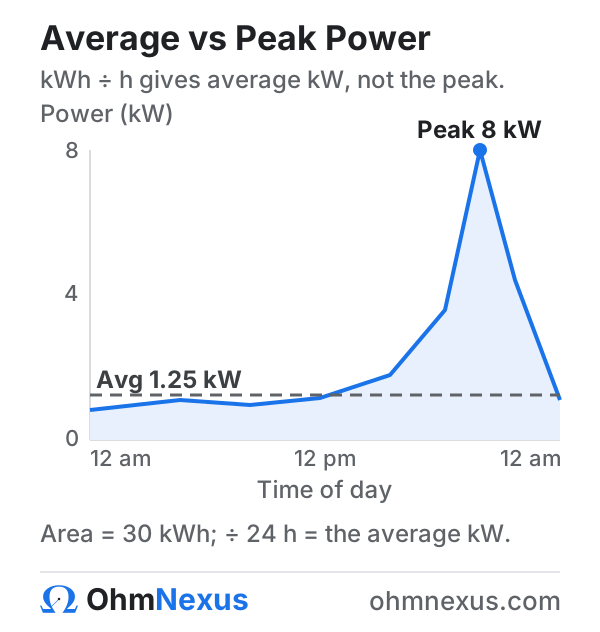
So use the average kW for energy and cost comparisons, and a peak or demand figure for sizing equipment. The two can differ by several times, which is why sizing from an average alone leaves a system undersized for real use. The ratio of average to peak is called the load factor: a steady load runs near 1, while a spiky home or business often sits at 0.2 to 0.4, so its peak is several times the average.
Calculating kW Demand From kWh
Commercial and industrial bills often include a demand charge based on kW, and the average demand over a period is kWh divided by the hours in it. A site using 20,000 kWh in a 730-hour month has an average demand of 20,000 ÷ 730 = about 27 kW. The billed demand is usually the highest short interval, not this average, but the average is the floor it cannot go below. Utilities measure that demand over a short window, often 15 or 30 minutes, and bill the highest one in the month, so a single brief spike can set the charge.
That peak demand also sets the current the service must carry, which the kW to amps calculator works out from the kW and voltage. Lowering the peak, by staggering large loads, cuts the demand charge even when total kWh stays the same.
kWh to kW Per Day, Month, and Year
To turn daily, monthly, or yearly energy into an average power, divide by the hours in that period: 24 for a day, about 720 for a month, and 8,760 for a year. A home using 30 kWh a day averages 30 ÷ 24 = 1.25 kW; the same home over a full year, about 10,500 kWh/yr, averages 10,500 ÷ 8,760 = about 1.2 kW, close to the daily figure because both cover the same steady use over a long window.
This table gives the average power for common daily energy totals, each spread across a 24-hour day. A typical U.S. home near 30 kWh a day averages about 1.25 kW of continuous power.
| Daily Energy | Average Power (over 24 h) |
|---|---|
| 10 kWh/day | 0.42 kW |
| 20 kWh/day | 0.83 kW |
| 30 kWh/day | 1.25 kW |
| 40 kWh/day | 1.67 kW |
| 50 kWh/day | 2.08 kW |
| 60 kWh/day | 2.5 kW |
For solar, dividing a period's kWh production by its hours gives the average power the array delivered, well below its kW rating, which is the peak it can hit near midday. A 10 kW array making 40 kWh on a short winter day averages just 40 ÷ 24 = 1.7 kW, far below its 10 kW nameplate. If your storage is rated in amp-hours, the Ah to kWh calculator converts it to kWh first.
Common Mistakes Converting kWh to kW
- Treating 1 kWh as 1 kW. A kilowatt-hour is energy; it equals 1 kW only over exactly one hour.
- Leaving out the time. Energy alone does not give power; you always need the hours it covers.
- Sizing from the average. The conversion gives the average, not the peak; a generator or service must cover the higher peak.
- Confusing a solar system's kW rating with its average output. The rating is the peak; the average from kWh is lower.
- Mixing periods. Divide by the matching hours: 24 for a day, 720 for a month, 8,760 for a year.
Disclaimer: This calculator converts energy in kilowatt-hours to average power in kilowatts over the time you enter. The result is an average; real loads peak well above it, so use a measured peak or demand figure, not this average, to size generators, services, inverters, or protective devices. Verify against metered demand data and your local electrical code, and consult a licensed electrician or qualified professional for sizing and installation.
Frequently Asked Questions
How do I convert kWh to kW?
Divide the energy in kilowatt-hours by the number of hours it covers: kW = kWh ÷ hours. The result is the average power. For example, 12 kWh used over 6 hours is 12 ÷ 6 = 2 kW. You need the hours as well as the kWh, because a kilowatt-hour is energy and a kilowatt is power.
Is 1 kWh equal to 1 kW?
No. 1 kWh is energy and 1 kW is power. A load averages 1 kW only if it uses 1 kWh over exactly one hour; the same 1 kWh over two hours averages 0.5 kW, and over a day about 0.042 kW. The hours are what turn kWh into kW.
How many kW is 1000 kWh?
It depends on the period the 1000 kWh covers, so there is no single kW value. Divide the energy by the hours in the period: a short window gives a large number, and a long one gives a small average. The reading that matters for a home is the monthly one, where 1000 kWh across a 30-day month is a little under 1.5 kW of steady draw, the baseline load behind the bill.
Does kWh to kW give average or peak power?
It gives average power. Dividing energy by time spreads it evenly, so the result is the steady power that would use that energy, not the peak. Real loads spike well above the average, so size generators, services, and inverters from a measured peak or demand figure, not from this average.
How do I calculate kW demand from kWh?
Average kW demand is the energy divided by the hours in the period: kW = kWh ÷ hours. A site using 20,000 kWh in a 730-hour month averages about 27 kW. Utilities usually bill the highest short-interval demand, which is higher than this average, but the average is the minimum it can be.
What is 1.5 kW in kWh?
That is the reverse, from power to energy, and it needs a run time. A 1.5 kW load uses 1.5 kWh in one hour, 3 kWh in two hours, and 0.75 kWh in 30 minutes. The kW to kWh calculator handles that direction with kWh = kW × hours.
Get early access to OhmNexus Pro
Join the list for new calculators, guides and services, plus first access to our upcoming advanced and AI-assisted design tools. No spam; unsubscribe anytime.
Need more electrical tools?
View All Calculators