
kVA to VA Calculator
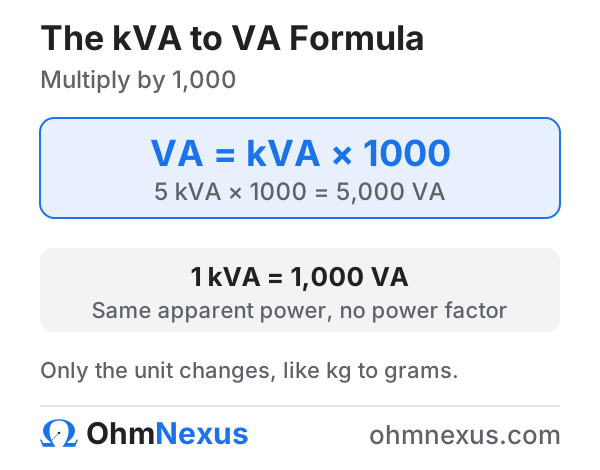
Convert kilovolt-amperes to volt-amperes by multiplying by 1,000, since one kVA is 1,000 VA. No power factor is needed, because kVA and VA measure the same apparent power.
How to Convert kVA to VA
To convert kilovolt-amperes to volt-amperes, multiply the kVA by 1,000. The "k" in kVA is the metric prefix kilo, which means one thousand, so one kilovolt-ampere is 1,000 volt-amperes.
- VA = apparent power in volt-amperes
- kVA = apparent power in kilovolt-amperes
- 1000 = volt-amperes in one kVA (the kilo prefix)
Example: 5 kVA is 5 × 1000 = 5,000 VA.
This is a pure unit change, the same as converting kilograms to grams or kilometers to meters. The apparent power is unchanged; only the unit it is written in is different. To go the other way, our VA to kVA calculator divides by 1,000.
How many VA is 1 kVA?
One kVA is 1,000 VA. Because the k stands for kilo, or one thousand, every kilovolt-ampere is exactly 1,000 volt-amperes. So 2 kVA is 2,000 VA, 0.5 kVA is 500 VA, and 37.5 kVA is 37,500 VA. Converting is always the same step: add three zeros, or move the decimal point three places to the right.
You do not need power factor
Going from kVA to VA takes no power factor, because both units describe apparent power. Power factor only matters when you convert apparent power to real power, that is kVA or VA to kW or watts. This conversion is just a change of scale: multiply by 1,000. If you do need real power, our kVA to kW calculator applies the power factor.
kVA to VA conversion chart
Multiply by 1,000 to move from kVA to VA. These include common transformer ratings:
| Kilovolt-amperes (kVA) | Volt-amperes (VA) |
|---|---|
| 0.5 kVA | 500 VA |
| 1 kVA | 1,000 VA |
| 1.5 kVA | 1,500 VA |
| 2 kVA | 2,000 VA |
| 5 kVA | 5,000 VA |
| 10 kVA | 10,000 VA |
| 15 kVA | 15,000 VA |
| 25 kVA | 25,000 VA |
| 37.5 kVA | 37,500 VA |
| 50 kVA | 50,000 VA |
| 75 kVA | 75,000 VA |
The step never changes: three zeros. So 0.1 kVA is 100 VA and 1,000 kVA is 1,000,000 VA. To go the other way, from VA back to kVA, divide by 1,000 with our VA to kVA calculator.
Standard transformer sizes
Distribution and control transformers come in standard kVA ratings, and converting them to VA is a common reason to make this calculation. Single-phase distribution transformers are built in sizes like 5, 10, 15, 25, 37.5, 50, and 75 kVA, which are 5,000 VA, 10,000 VA, 15,000 VA, and so on. Small control transformers are often labeled in VA instead, such as 50 VA or 100 VA, which are 0.05 kVA and 0.1 kVA. Putting a rating in VA lets you line it up against a load or a smaller unit given in volt-amperes without a scale mismatch.
When you convert kVA to VA
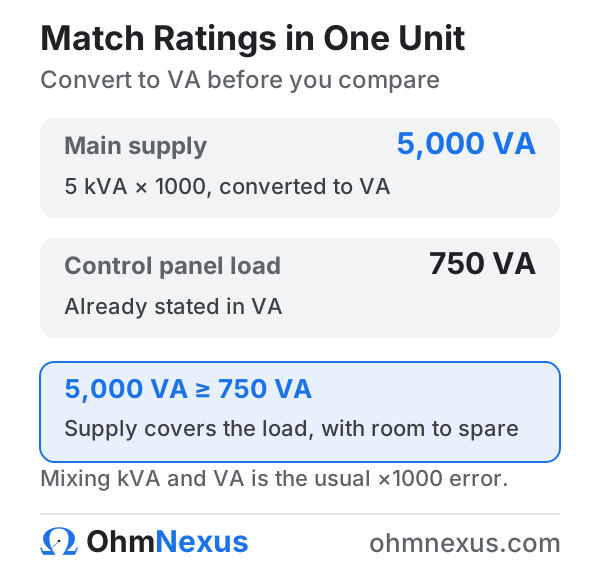
The most common reason is matching equipment rated in different units. A control panel transformer might be listed in VA while the main supply is quoted in kVA; putting both on one scale shows at a glance whether the supply covers the load. It also comes up when a load schedule is written in VA and you need to compare it with a kVA nameplate, or the other way around. Keeping one unit throughout a calculation avoids the factor-of-1,000 error that creeps in when VA and kVA are mixed.
For quick mental math, the VA figure is just the kVA figure with three more zeros. A 0.5 kVA transformer is 500 VA, a 10 kVA generator is 10,000 VA, and a 100 kVA unit is 100,000 VA. There is nothing to round, because the relationship is exact. Apparent power in kVA or VA is the combination of real power (kW) and reactive power that a supply must provide; for the concept and the power triangle behind it, see our Amps to kVA calculator, and for the volt-ampere as a unit, Amps to VA. The kilo prefix is part of the SI system described in the NIST guide to SI units.
Frequently Asked Questions
How do you convert kVA to VA?
How many VA is 1 kVA?
How do you convert VA to kVA?
How many kVA is 500 VA?
What is 2kVA in VA?
What is 1.5 kVA in VA?
Get early access to OhmNexus Pro
Join the list for new calculators, guides and services, plus first access to our upcoming advanced and AI-assisted design tools. No spam; unsubscribe anytime.
Need more electrical tools?
View All Calculators