
VA to kVA Calculator
Convert volt-amperes to kilovolt-amperes by dividing by 1,000, since one kVA is 1,000 VA. No power factor is needed, because VA and kVA measure the same apparent power.
How to Convert VA to kVA
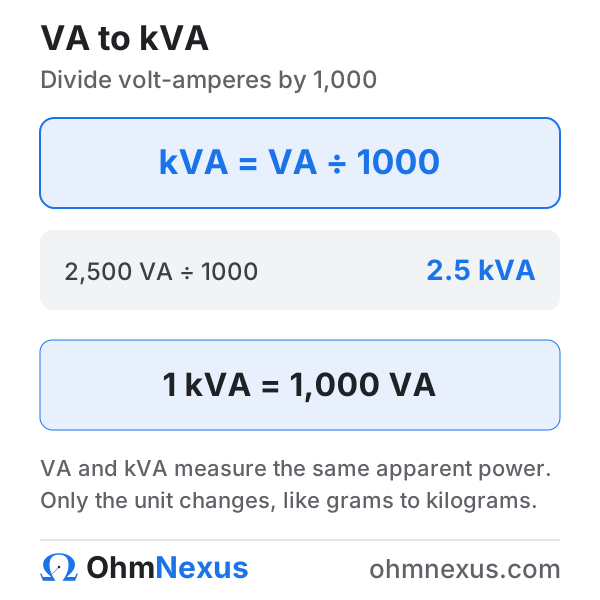
To convert volt-amperes to kilovolt-amperes, divide the VA by 1,000. The "k" in kVA is the metric prefix kilo, which means one thousand, so a kilovolt-ampere is 1,000 volt-amperes.
- kVA = apparent power in kilovolt-amperes
- VA = apparent power in volt-amperes
- 1000 = volt-amperes in one kVA (the kilo prefix)
Example: 2,500 VA is 2,500 ÷ 1000 = 2.5 kVA.
This is a pure unit change, the same idea as converting grams to kilograms or meters to kilometers. The size of the apparent power does not change; only the unit it is written in does. To go the other way, our kVA to VA calculator multiplies by 1,000.
Is VA the same as kVA?
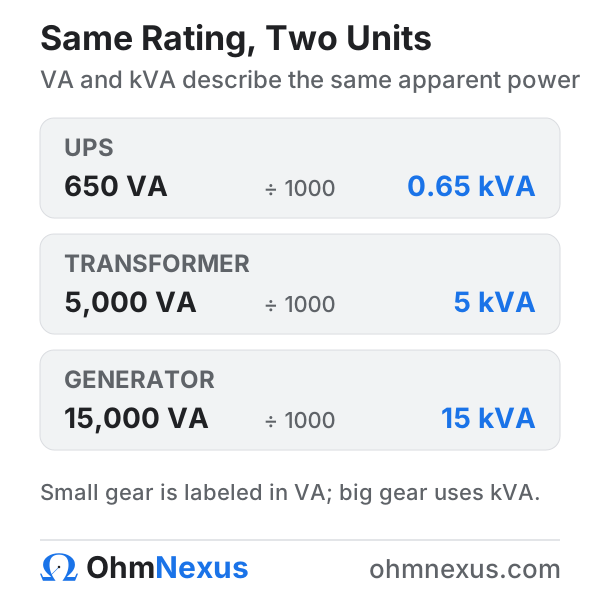
Yes. VA and kVA measure the same quantity, apparent power, so a rating in one is the same rating in the other, written at a different scale. A 5,000 VA supply and a 5 kVA supply are the very same supply. Small equipment like a home UPS is usually rated in VA because the numbers stay convenient, while larger transformers and generators use kVA to keep the figures short. Moving between the two never changes the actual rating.
How many VA is 1 kVA?
One kVA is exactly 1,000 VA. The k is the kilo prefix, which always means a factor of one thousand, so there is nothing to estimate: 1 kVA is 1,000 VA, 2 kVA is 2,000 VA, and 0.5 kVA is 500 VA. This is an exact conversion, not an approximation, because both units measure the same apparent power.
You do not need power factor
No power factor is involved in a VA to kVA conversion. Both figures are apparent power, so you are only relabeling the same quantity at a smaller scale. Power factor is the bridge from apparent power to real power in watts or kW, which is a separate calculation. Here the whole operation is one division by 1,000, and a power-factor box, if a tool shows one, has no effect on the result. When you do need real power, the kVA to kW calculator brings power factor into play.
VA to kVA conversion chart
Divide by 1,000 to move from VA to kVA. These are common equipment ratings:
| Volt-amperes (VA) | Kilovolt-amperes (kVA) |
|---|---|
| 100 VA | 0.1 kVA |
| 500 VA | 0.5 kVA |
| 750 VA | 0.75 kVA |
| 1,000 VA | 1 kVA |
| 1,500 VA | 1.5 kVA |
| 2,500 VA | 2.5 kVA |
| 5,000 VA | 5 kVA |
| 7,500 VA | 7.5 kVA |
| 10,000 VA | 10 kVA |
| 15,000 VA | 15 kVA |
The pattern is always the same: move the decimal point three places to the left. So 1,500 VA is 1.5 kVA and 800 VA is 0.8 kVA. To go the other way, from kVA back to VA, multiply by 1,000 with our kVA to VA calculator.
Why use kVA instead of VA?
Both units are correct, so the choice is about readability. A large transformer rated at 500,000 VA is easier to read and specify as 500 kVA, just as 500,000 grams is easier as 500 kilograms. Keeping big apparent-power figures in kVA avoids long strings of zeros and matches how manufacturers label transformers, switchgear, and standby generators. Small devices stay in VA because their ratings, like 300 VA or 650 VA, are already short.
Where VA and kVA ratings appear
UPS units: a home or small office UPS is often labeled in VA, such as 650 VA or 1,500 VA, which is 0.65 kVA or 1.5 kVA. Transformers: control and distribution transformers are rated in VA for small sizes and kVA for larger ones, with 1 kVA, 5 kVA, and 15 kVA being common. Generators: portable generators may show VA or kVA on the nameplate. Converting to a single unit lets you compare equipment and match a load to a supply without the scale getting in the way.
Getting the conversion right
A quick way to check a match is to put the load and the supply in the same unit first. If a rack of equipment adds up to 3,200 VA and the UPS is rated 5 kVA, convert the UPS to 5,000 VA and you can see it covers the load with room to spare. Mixing VA and kVA in one calculation is the most common source of a factor-of-1,000 error. Apparent power, whether you write it in VA or kVA, is what a supply has to deliver once real power (kW) and reactive power are combined; the Amps to kVA calculator covers that idea and the power triangle, while Amps to VA covers the volt-ampere itself. The kilo prefix comes from the SI system, set out in the NIST guide to SI units.
Frequently Asked Questions
How do you convert VA to kVA?
How many VA to 1 kVA?
Is VA the same as kVA?
What is 5000 VA in kVA?
What is 1000 VA in kVA?
Do you need power factor to convert VA to kVA?
Get early access to OhmNexus Pro
Join the list for new calculators, guides and services, plus first access to our upcoming advanced and AI-assisted design tools. No spam; unsubscribe anytime.
Need more electrical tools?
View All Calculators