
Volts to Amps Calculator (Ohm's Law and Power)
Convert volts to amps using Ohm's law (amps = volts ÷ resistance) or the power formula (amps = watts ÷ volts). Volts and amps measure different things, so a voltage alone does not fix the current: you need either the resistance or the power. Enter the voltage and either the resistance or the wattage to find the current in amps.
How to Convert Volts to Amps
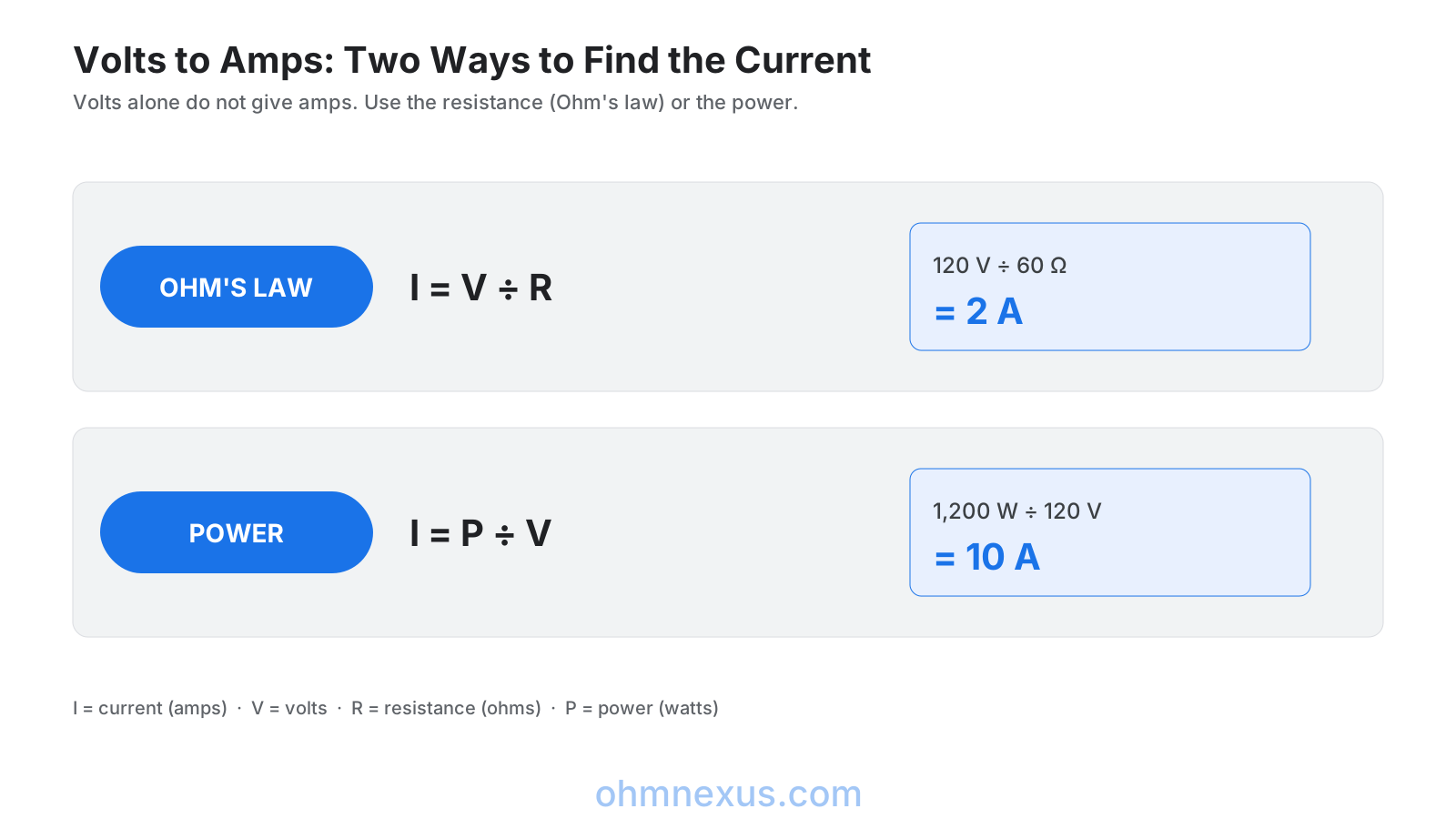
To convert volts to amps, divide by a second quantity, because volts and amps measure different things. With the resistance, use Ohm's law: amps = volts ÷ resistance (I = V / R). With the power, use amps = watts ÷ volts (I = P / V). A voltage on its own does not set the current.
Volts measure voltage, the electrical pressure, and amps measure current, the flow of charge that pressure produces. How much current flows depends on the resistance in the circuit or the power the load draws. A low-resistance load draws a large current, while a high-resistance load barely draws any, both at the same voltage. For the full difference between the two units, the amps to volts calculator explains amps versus volts.
Volts to Amps Formulas
- I = current in amperes (amps)
- V = voltage in volts
- R = resistance in ohms (Ω)
Example: 120 V across a 60 Ω resistor draws 120 ÷ 60 = 2 A.
- P = power in watts
Example: a 1,200 W load on 120 V draws 1,200 ÷ 120 = 10 A.
Ohm's law is the choice when you know the resistance, such as a resistor or a heating element. The power formula is the choice when you know the wattage, such as an appliance nameplate on a known supply voltage. Both give the current in amps.
How to Use the Volts to Amps Calculator
- Choose the method: Ohm's law if you know the resistance, or Power if you know the wattage.
- Enter the voltage in volts.
- Enter the resistance in ohms, or the power in watts, depending on the method.
- Read the current in amps.
Volts to Amps Worked Examples
Example 1: Ohm's Law, 120 V and 60 Ω
A 120 V supply across a 60 Ω resistance drives:
I = 120 ÷ 60 = 2 A
Halve the resistance to 30 Ω and the same 120 V drives 4 A. Lower resistance means more current at a fixed voltage.
Example 2: Power, 1,200 W on 120 V
A 1,200 W appliance on a 120 V circuit draws:
I = 1,200 ÷ 120 = 10 A
The same 1,200 W on a 240 V circuit draws only 1,200 ÷ 240 = 5 A, half the current at twice the voltage.
Example 3: Is 20 Amps the Same as 120 Volts?
No, they measure different things, but they meet on a 20 A, 120 V circuit. That circuit carries 120 × 20 = 2,400 W of power, and a load pulling 20 A from 120 V has a resistance of 120 ÷ 20 = 6 Ω. The 20 A is the current and the 120 V is the voltage; the power and resistance link them.
Example 4: Ohm's Law, 240 V and 24 Ω
A 240 V supply across a 24 Ω load drives:
I = 240 ÷ 24 = 10 A
It takes twice the resistance of a 120 V circuit to hold the same 10 A at 240 V, because the voltage is doubled.
Example 5: Power, 60 W on 12 V
A 60 W device on a 12 V DC system, such as a car or RV, draws:
I = 60 ÷ 12 = 5 A
The same 60 W on a 120 V outlet is only 0.5 A, so the low-voltage version pulls ten times the current.
Volts to Amps Chart (Ohm's Law)
This chart uses Ohm's law, I = V / R, to give the current for common voltages and resistances. Read down for the voltage and across for the resistance; the calculator handles any values, including the power method.
| Voltage | 6 Ω | 12 Ω | 24 Ω | 48 Ω |
|---|---|---|---|---|
| 12 V | 2 A | 1 A | 0.5 A | 0.25 A |
| 24 V | 4 A | 2 A | 1 A | 0.5 A |
| 120 V | 20 A | 10 A | 5 A | 2.5 A |
| 240 V | 40 A | 20 A | 10 A | 5 A |
Volts to Amps at 120V, 240V, and 12V
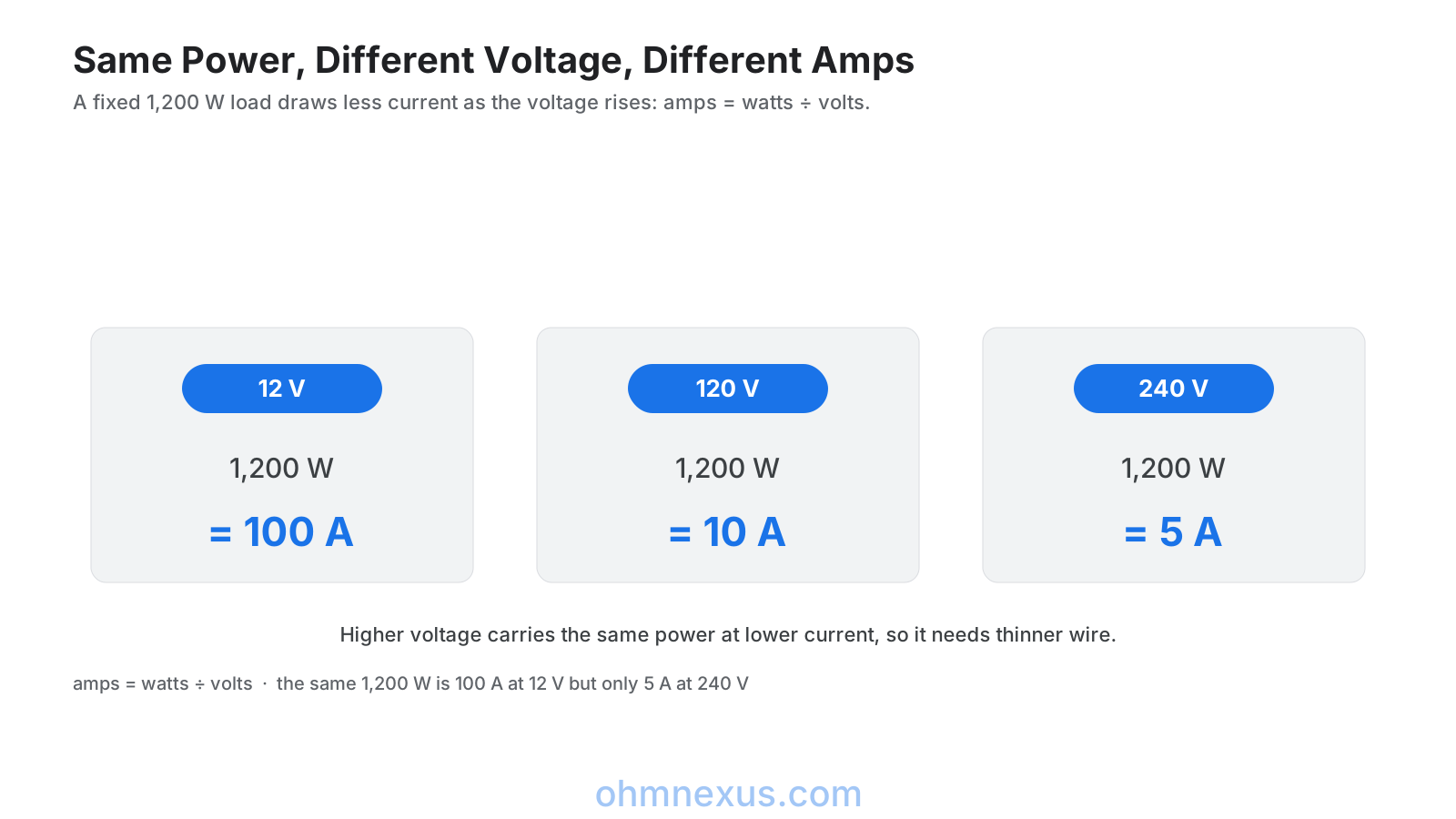
The voltage in the circuit sets how the power splits into current. On the power method, amps = watts ÷ volts, so a given wattage draws fewer amps at a higher voltage. A 2,400 W load is 20 A on a US 120 V circuit but only 10 A on 240 V, which is why big appliances like dryers and EV chargers run at 240 V: half the current means thinner wire and a smaller breaker. On 12 V DC, common in cars, RVs, and solar, the same 2,400 W would be 200 A, so low-voltage systems need very heavy cable.
Outside North America, single-phase mains is usually 230 V, close to the US 240 V, so the amps per watt are similar. Always use the actual voltage of the circuit, because the current scales inversely with it.
The table below gives the current common household loads draw at 120 V and 240 V, using amps = watts ÷ volts:
| Load | Power | Amps at 120 V | Amps at 240 V |
|---|---|---|---|
| LED bulb | 10 W | 0.08 A | 0.04 A |
| Laptop | 60 W | 0.5 A | 0.25 A |
| Microwave | 1,000 W | 8.33 A | 4.17 A |
| Space heater | 1,500 W | 12.5 A | 6.25 A |
| Clothes dryer | 3,000 W | 25 A | 12.5 A |
| EV charger | 7,200 W | 60 A | 30 A |
Volts and Amps Are Not the Same
Volts and amps measure different things, so a voltage does not convert to a current on its own. Volts are the electrical pressure and amps are the flow that pressure drives through a load. The same 120 V outlet delivers 1 A to a small charger and 12 A to a heater, because the current depends on the load, not just the voltage. Raising the voltage does not raise the current on its own, and a load that pulls more amps is drawing more through the same voltage, set by its resistance or its power. The amps to volts calculator covers the full amps versus volts comparison and the reverse conversion.
Using Power to Find Amps
When a device lists its wattage, the power formula is the quickest way to its current: amps = watts ÷ volts. A 60 W bulb on 120 V draws 0.5 A, and a 1,500 W heater on 120 V draws 12.5 A. This is the same relationship as watts = volts × amps, rearranged. The current it gives is also what sizes the wire and the breaker for a circuit, since both are rated in amps rather than in watts or volts. To go from watts straight to amps with phase and power factor for AC, the watts to amps calculator handles it, and the amps to watts calculator works the other way. Apparent power in volt-amperes converts to current on the VA to amps calculator.
Volts to Amps for Batteries and Solar
Low-voltage DC systems are where volts to amps matters most, because the current runs high. On a 12 V battery, a 1,200 W inverter load draws 1,200 ÷ 12 = 100 A, which is why battery and inverter cables are so thick and are fused for high current. Moving the same system to 24 V or 48 V cuts the current in half or to a quarter, so larger off-grid and solar systems use 48 V to keep the amps and the cable size down. A 600 W load is 50 A at 12 V, 25 A at 24 V, and about 12.5 A at 48 V, for the same power. This is the main reason system voltage is chosen before the wiring.
Common Mistakes Converting Volts to Amps
- Treating volts and amps as the same. They measure different things, so 1 volt is not 1 amp.
- Expecting a direct conversion. You always need a second value, the resistance or the power.
- Using the wrong voltage. A load draws different amps at 120 V than at 240 V or 12 V.
- Mixing up the formulas. Use I = V / R with resistance, and I = P / V with power.
- Forgetting how high 12 V current runs. At 12 V the amps are ten times the 120 V figure for the same power, so DC wiring and fuses must be sized for it.
Disclaimer: This calculator relates voltage to current using Ohm's law or the power formula, for the values you enter. Real circuits also involve temperature, wire resistance, and AC effects like power factor that can shift the result. Always verify against measured values and nameplate data, and consult a licensed electrician for wiring, breaker, and safety decisions.
Frequently Asked Questions
How do you convert volts to amps?
You need a second value, because volts and amps measure different things. With the resistance, use Ohm's law: amps = volts ÷ resistance (I = V / R). With the power, use amps = watts ÷ volts (I = P / V). For example, 120 V across a 60 Ω resistor is 120 ÷ 60 = 2 A.
Is 1 volt equal to 1 amp?
No. A volt is a unit of voltage, the electrical pressure, and an amp is a unit of current, the flow of charge, so they are different quantities and cannot be equal. A 1 V source can push almost any current depending on the resistance, and a 1 A current can occur at almost any voltage.
Is 20 amps 120 volts?
No, amps and volts measure different things, but a 20 A, 120 V circuit is common. It carries 120 × 20 = 2,400 watts of power, and a load pulling 20 A from 120 V has a resistance of 120 ÷ 20 = 6 Ω. The 20 A is the current and the 120 V is the voltage.
How many amps is 240 volts?
It depends on the resistance or the power, because 240 volts alone does not set the current. Using Ohm's law, 240 V across a 24 Ω load is 240 ÷ 24 = 10 A. Using power, a 2,400 W load on 240 V draws 2,400 ÷ 240 = 10 A. You always need the second value.
What is 1500VA in amps?
Volt-amperes convert to current by dividing by the voltage: for single-phase, amps = VA ÷ volts. So 1,500 VA on a 120 V supply is 1,500 ÷ 120 = 12.5 A, and on 240 V it is 6.25 A. The VA to amps calculator covers apparent power to current, including three-phase.
How do you find amps from watts and volts?
Divide the watts by the volts: amps = watts ÷ volts (I = P / V). A 1,200 W load on 120 V draws 1,200 ÷ 120 = 10 A. This is the power formula rearranged from watts = volts × amps, and it is the fastest route when a device lists its wattage.
Get early access to OhmNexus Pro
Join the list for new calculators, guides and services, plus first access to our upcoming advanced and AI-assisted design tools. No spam; unsubscribe anytime.
Need more electrical tools?
View All Calculators